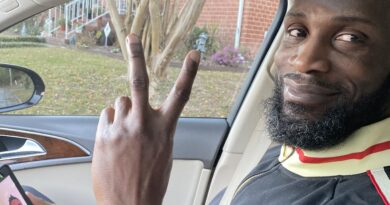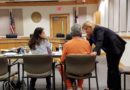
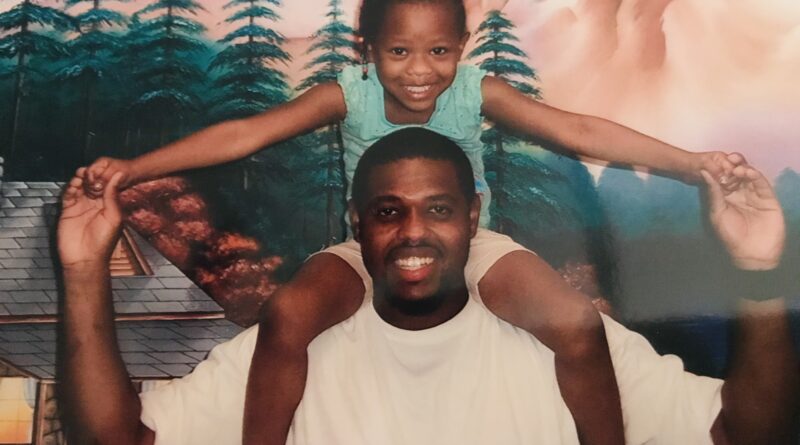
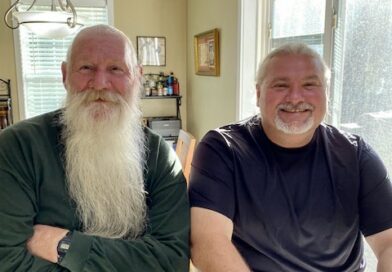
Dwayne Allen Dail celebrates after becoming the 207th
person nationwide to be exonerated by DNA. He was
represented by the Center. Standing next to Dwayne is
the Center’s director, Christine Mumma. Behind Dwayne
is his son, Chris, who was born seven months after Dwayne
went to prison.
Life in prison is a nightmare for those who commit crimes. Imagine what it’s like for those who are in prison for a crime they did not commit.

The North Carolina Center on Actual Innocence, which coordinates the Innocence Projects'® at each of North Carolina’s law schools (Campbell, Charlotte, Elon, Duke, NCCU, UNC, and Wake Forest), is dedicated to investigating post-conviction claims of actual innocence from unrepresented North Carolina inmates. The Center is part of the National Innocence Network coordinated by the Innocence Project® at The Benjamin N. Cardozo School of Law at Yeshiva University.

Wrongful convictions can be caused by a myriad of factors, including mistaken eyewitness identification, false confessions, the use of unreliable jailhouse “snitches,” tunnel-vision in investigations, misconduct, and ineffective representation by defense attorneys.


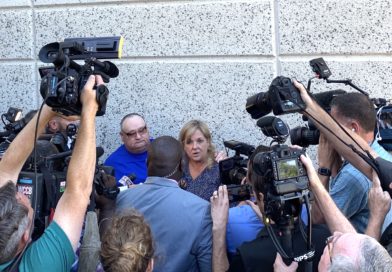
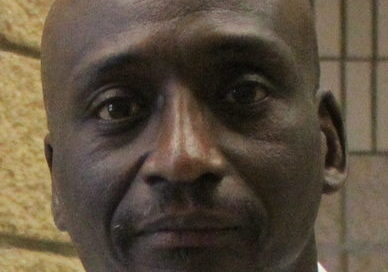
Darryl Hunt (center) celebrating his freedom with
lead attorney Mark Rabil (left) and Assistant
Appellate Defender Ben Dowling-Sendor.
Note: Darryl’s case was not a Center case.
After an intensive review and screening process that results in rejection of over fifty percent of claims, cases are assigned to law school Innocence Projects® for investigation by law students who are guided by faculty advisors in coordination with the Center. Investigations include conducting additional research and information gathering, interviewing witnesses, locating physical evidence that can be tested, and working with inmates to determine if something went wrong and what we can do to restore an innocent person’s freedom.

The Center is also dedicated to promoting systemic reform that will increase the reliability of convictions and decrease the amount of time it takes to obtain the freedom of those who are innocent. To that end, we organize educational forums, train law students who represent the future of our legal system, and participate in statewide and national policymaking initiatives.

While people of color and those with limited resources are more likely to be wrongfully convicted, no one is exempt. We hope this website will serve to bring the problem of wrongful convictions, as well as its solutions, to the forefront. We can all make a difference - the first step is to become informed.

Welcome to our website.